
US FDA Laser Show Compliance: Variance, Product Report and Accession Number
Most US laser-show compliance failures are not about output power. They are about paperwork that does not exist: a product report with no accession number, a variance held by the wrong party, a model designation that does not match the customs entry. Three roles, three verdicts - this guide shows exactly who files what, and how to verify it before the freight moves.
In this guide
- Start Here: Three Roles, Three Verdicts
- Who Files What: Manufacturer, Show Operator, Importer
- The Accession Number: What It Is, and How to Verify One
- Import Alert 95-04: Why a Compliant Stage Laser Light Still Gets Held
- When the Buyer Holds the Variance: What Your Supplier Owes You
- How Other Markets Compare: Canada, EU, Australia, Japan
Professional laser equipment sits in a narrow regulatory gap. A 10 W full-color stage laser light is a lawful product to manufacture, and a lawful product to import. The moment it is aimed across an audience in a US venue, it exceeds the exposure limits the federal laser standard allows for a demonstration product - and the gap between "lawful product" and "lawful operation" is closed by paperwork, not by watts.
That paperwork is checked at the border, against a database, before anyone sees the show. This guide maps the three filings that matter, the one number that ties them together, and the specific reasons a compliant stage laser light still ends up in detention.
Start Here: Three Roles, Three Verdicts
Every US compliance question about a stage laser light resolves through three gates, in order. The third answer tells you which filing is yours - and, more usefully, which one is not.
Does the unit exceed the Class IIIa accessible emission limit, or is it operated so that laser radiation reaches a space people occupy?
Standard path. Product report plus certification label. No variance required.
Continue to Gate 02. This is the majority of professional show fixtures.
Is it a demonstration laser product - a light show, display or effect - rather than a fixed industrial, medical or laboratory installation?
No variance route. It must meet 21 CFR 1040.10 and 1040.11 as written for its class. Redesign or reclassify.
Continue to Gate 03. A variance under 21 CFR 1010.4 is now the only lawful route.
Which of the three roles are you?
Product report per model under 21 CFR 1002.10, plus a variance application under 1010.4 for any Class IIIb or IV show laser.
Your own variance, plus an annual report listing every stage laser light by manufacturer, model designation and accession number.
Form FDA 2877, Declaration B, at entry - with declared data that matches the manufacturer's report exactly.
Gate 02 is where most people stop reading too early. 21 CFR 1040.11(c) does not ban high-power show lasers. It caps what a demonstration laser product may expose, at the accessible emission limits of Class I and, where applicable, Class IIa, Class II or Class IIIa. Anything above that ceiling is non-compliant unless CDRH has granted a variance. There is no self-declaration route and no CE-style self-certification. A stage laser light that is entirely legal to sell in Europe can be illegal to operate in a US arena - same hardware, same show file, different jurisdiction.
A variance is not a certificate you buy once. It is an approval with conditions attached - beam height, scan-failure detection, clearance distances, permitted effect types, permitted venue types - and those conditions live in an attachment that your show file has to respect on site.
Who Files What: Manufacturer, Show Operator, Importer
The table below is the whole architecture on one screen. Read the four columns as independent facts: the filing, the form, and the party carrying the liability are three different things, and they are frequently assumed to be one.
| Role | Filing | Failure mode |
|---|---|---|
| Manufacturerof the stage laser light | Product report per model, 21 CFR 1002.10 (Form FDA 3632 is the reporting guide) | No report, no accession number, and no Declaration B at entry. |
| Manufacturerof Class IIIb / IV show lasers | Variance under 21 CFR 1010.4 (Form FDA 3147) | A show model marketed with no variance behind it. |
| Show operatorproduction, venue, rental house | Own variance plus an annual report (Form FDA 3636 guide), due 1 September for 1 July to 30 June | Lapsed variance, or a report missing a model used that year. |
| Importer of record | Form FDA 2877, Declaration B, quoting the accession number | Declared manufacturer, model or number does not match the file. |
| Assemblerintegrator | Nothing new if the existing report covers the assembly | New scanner, diode bank or aperture needs a supplement under 1002.11. |
Two distinctions the table compresses, both of which come up in real audits:
The form numbers are not all forms
Forms FDA 3632, 3636, 3640 and 3637 are reporting guides - FDA's own templates for preparing a submission. Forms FDA 3147 and 3633 are applications. Forms FDA 2877 and 766 are declarations used at the border. A supplier who offers you a "3632 certificate" has told you, in three characters, that nobody in the chain has opened the regulation.
One report covers many units, but not many models
21 CFR 1002.10(b) requires the report to identify each model. A 3 W head and a 30 W head are two reports and two accession numbers, even when they share a chassis, a control protocol and a brand name. This is the single most common mismatch in Chinese-manufactured product lines, where one stage laser platform is sold under six power ratings.
The Accession Number: What It Is, and How to Verify One
A receipt, not an approval
When CDRH's Document Control Center logs a report, it issues an acknowledgement of receipt letter. The letter confirms four things: that the report arrived, that it was entered into the database, the product code assigned to it, and the accession number. FDA states directly that the letter is not an approval of the product, and that an accession number can be withdrawn. It is a docket number, in the plainest sense - proof that a document exists, not proof that the document is adequate.

This matters commercially, not just pedantically. Suppliers routinely present an accession number as regulatory clearance, and buyers routinely accept it, because both sides are using the vocabulary of medical devices in a market that does not work that way. A laser product is certified by its manufacturer against the federal performance standard. CDRH does not approve it, does not issue a certificate, and does not test it before sale.
What the number does buy you is a place in the database that the border is checked against. That is why it is worth verifying rather than trusting.
Where the number has to appear
- On the CDRH acknowledgement of receipt letter - the source document, and the only primary evidence.
- In the entry declaration: Form FDA 2877 Declaration B, with the accession number transmitted under the Affirmation of Compliance code for the product.
- In the variance holder's annual report, which must list manufacturer, model designation and accession number for every stage laser light used.
- In the supplement and annual reports that keep the file current - a report that is never maintained becomes a dormant record.
How to verify a supplier's number before you wire a deposit
Ask for the letter, not a certificate. Three fields decide everything: the legal manufacturer name, the product code, and the model designation. All three must describe the goods on your purchase order.
Match the model designation character for character. The reported model, the nameplate and the commercial invoice have to be the same string. "X-30" and "X30" are different records in a database, and a mismatch is a manual review.
Check the product code. FDA publishes product codes for radiation-emitting electronic products. A laser show fixture that resolves to a non-laser code, or to a laser component code, is a filing built on the wrong product description.
Check Import Alert 95-04. The Red List is public. A manufacturer on it will be detained without physical examination regardless of how good your paperwork is, so check it before the order, not after the hold.
Confirm the file is current. FDA entry reviewers verify annual report status, not just the number. A report filed four years ago with no annual reports behind it is a number attached to an abandoned file.
Escalate to CDRH if it still does not reconcile. Radiation safety submissions and correspondence run through the CDRH rad health mailbox rather than a public portal. There is no public accession-number lookup - unlike drug or device registrations - so the letter is the only primary evidence a third party can hold.
There is no public database. This is the most misunderstood point in the whole process. You cannot look up a laser product report the way you look up a 510(k). A supplier who says the number "cannot be found online" is usually right, and also usually has no letter to show you - those are two very different situations, and only one of them is normal.
Import Alert 95-04: Why a Compliant Stage Laser Light Still Gets Held
The units were certified. The show ran for two years in Europe without an incident. Then the container reaches the port, and the entry does not clear. Nothing about the hardware changed; what changed is that a US entry reviewer compared four declared values against an internal database, and one of them did not match.
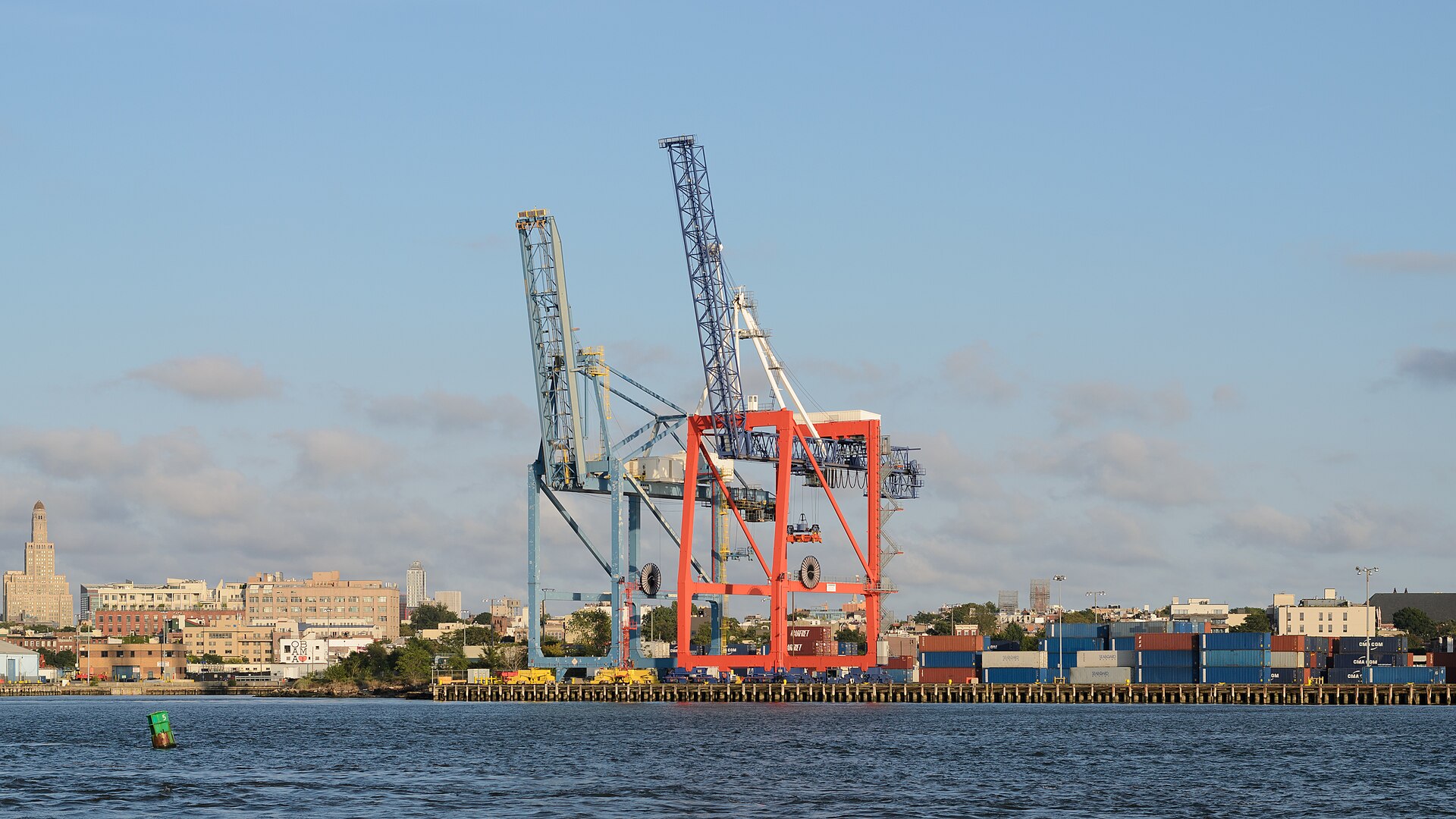
This is the part of the process that surprises exporters most. Certification is a statement about a product; an entry is a comparison of records. A container sitting on a terminal berth is not being judged on how well the stage laser light scans - it is being judged on whether the manufacturer, the model designation and the accession number on the entry form exist, and agree, in FDA's own systems.
When they do, the entry clears electronically in minutes. When they do not, the shipment waits - and waiting has a daily cost that has nothing to do with the goods.
What the alert actually covers
Import Alert 95-04 is titled, at full length, Detention Without Physical Examination of Laser Pointers, Laser Gunsights, Laser Levels, Laser Light Shows, Laser Pointer Key Chains, and Similar Products That Fail to Comply With Applicable Performance Standards and Reporting Requirements. It authorizes detention without physical examination - DWPE - meaning the goods can be held on the strength of the manufacturer's record rather than the condition of the shipment. Its product categories explicitly cover high-power and low-power laser light show equipment. The Red List of affected firms is public and long, and it is dominated by manufacturers in one sourcing region.
The screening conditions
The alert sets out the conditions under which a laser shipment is detained. The ones that decide show-equipment entries:
- No product report has been submitted for the laser product.
- No permanently affixed warning logotype label on the product.
- No certification or identification information on the product or in the manual.
- No instructions for safe use supplied.
- The class or output stated on the label disagrees with the manual.
- Laser output above the alert's pointer-era threshold of 5 mW.
Taken literally, that last threshold captures every professional show laser ever built. In practice, the conditions that decide a show-equipment shipment are the missing product report, the missing certification label, and a label that contradicts the manual. Read the list in that order and it becomes a checklist rather than a threat: the hardware being compliant does not cure an absent filing.
Two ways out, and only one of them is cheap
If the defect is labeling or documentation, the importer can request reconditioning on Form FDA 766 - relabel, add the missing information, bring the goods into conformity under supervision. If the manufacturer itself is on the Red List, reconditioning does not help, and the exit is a written submission demonstrating that the conditions causing the appearance of violation have been resolved: quality control and testing consistent with 21 CFR 1010.2, conformity with 21 CFR 1040.10 and 1040.11, and the additional information CDRH reasonably requires from the importer under 21 CFR 1002.10(k). That submission goes to the import alerts mailbox and is routed to CDRH's electronic products team.
Both routes cost weeks. Neither is available to a buyer who discovers the problem after the vessel sails, which is why the verification steps above belong in procurement rather than in logistics.
FDA's screening tool compares the declared manufacturer, product description and affirmations of compliance against its internal systems. Entries that match clear electronically. Entries that do not, wait for a human - and a human with a detention authority reads the alert.
When the Buyer Holds the Variance: What Your Supplier Owes You
In the US touring and festival market, the variance is usually held by the production company or the rental house, not by the equipment brand. That is not an accident of preference. A variance is written around effects, venue types and clearance distances - all of which belong to the show, not to the box. The holder is the party who can actually control beam height at 2 a.m. during a changeover.
Which creates a dependency that runs backwards along the supply chain. Class IIIb and IV show lasers may only be sold by, or to, a holder of a current approved variance. The holder may then use only certified stage laser lights that its variance permits, and must list each of them in its annual report by manufacturer, model designation and accession number. Renewal of that variance is conditional on the annual report being filed.
Follow the chain to its end and the conclusion is unavoidable: the buyer cannot complete its own federal filing without documents that only the supplier can produce. A purchase order for show lasers is therefore also a request for a compliance file, whether or not anyone wrote that into the specification.
This is the part of the process Darktone treats as a deliverable rather than a favor. US-bound show lasers ship with the compliance file attached: the CDRH acknowledgement letter carrying the accession number, the variance documentation covering the models supplied, label artwork matching what was reported, and the model designation exactly as filed - so the variance holder can list each unit in its annual report without a round of emails across time zones.
The warning label is where the product and the paperwork meet. A logotype that is missing, removable, or inconsistent with the class and output stated in the manual is one of the conditions in Import Alert 95-04 - and it is the first thing an inspector can check without opening a case. The same facts appear on the nameplate, in the product report, on the entry declaration and in the variance holder's annual report, and every one of them has to match.
Ask for all five documents
| Document | What it proves | What to check |
|---|---|---|
| CDRH acknowledgement letter | A report exists and was logged. | Manufacturer name, product code, model designation. |
| Variance or amendment letter | The model is cleared for show use. | Effective and termination dates, attached conditions. |
| Certification label artwork | The label matches the report, per 1010.4(d). | Class, wavelength, output, variance number. |
| Model designation mapping | Commercial and reported names are one record. | No marketing alias left unmapped. |
| Annual report status | The file is alive, not dormant. | Latest submission date and any supplements. |
Suppliers who have genuinely filed will produce all five in an afternoon. Suppliers who have not will send a test report from a third-party laboratory instead - which is a different document answering a different question, and will not survive an entry review.
How Other Markets Compare: Canada, EU, Australia, Japan
The US is unusual in separating product certification from a use-based approval, and in issuing a number that has to be quoted at the border. The comparison below shows how far the other major markets diverge - which is exactly why compliance habits built for one market travel badly to another.
| Market | Regulator and rules | Before sale | Show duty | Accession no. |
|---|---|---|---|---|
| United States | FDA / CDRH. 21 CFR 1002, 1010, 1040; Laser Notice 56. | Product report per model; variance for Class IIIb / IV show lasers. | Beam height, scan failure, clearance; annual report by 1 September. | Yes |
| Canada | Health Canada. RED Act and Regulations, amended REDR in force 9 October 2025. | No pre-market filing; conformity with IEC 60825-1. | Operator and venue duties under provincial OHS rules. | No |
| European Union | CE marking. EN 60825-1, EN 50689; LVD, EMC, RoHS, Machinery. | Self-declaration plus technical file; no central filing. | Employer duties under 2006/25/EC; some states require notification. | No |
| Australia | State and territory radiation regulators. AS/NZS IEC 60825.1 and 60825.3. | Product conformity plus RCM for electrical safety. | Laser registration and Display Safety Record; CASA notice for outdoor shows. | No |
| Japan | JIS C 6802; Electrical Appliance and Material Safety Law. | Classification and labelling; PSE mark where applicable. | Operator and venue responsibility under the JIS user requirements. | No |
What the comparison actually tells you
Canada and the EU both regulate the product and leave the show to occupational safety law. Canada's amended regulations now align with IEC 60825-1 and add bilingual labeling plus manufacturer name, model, date of manufacture and Canadian distributor details - a labeling burden, not a filing burden. The EU asks for a technical file you keep rather than a document you submit. Australia is the closest to the US in spirit, but the gate is at state level and the instrument is a show-specific safety record rather than a federal variance.
Only the US creates a docket number that a customs reviewer will check, and only the US conditions lawful operation on an approval tied to the show rather than the product. Teams that are rigorous about EN 60825-1 test reports still arrive at US ports with no product report at all, because nothing in the European process ever asked them for one.
The short version. Certification is a product fact. A report is a filing. A variance is a permission to operate. A 2877 declaration is a promise at the border that all three exist and agree. Three roles, three verdicts - and one number that has to be the same everywhere it appears.
About Darktone
Founded in 2010, Darktone is a manufacturer of stage laser lights and stage lighting for concerts and tours, festivals, theatre and cultural tourism productions, corporate events and nightlife venues. The company holds in-house engineering and programming capability, FDA variance coverage for its stage laser range, CE, RoHS and FCC certification, and ships Pangolin FB4 control pre-installed as an authorized dealer. Outdoor models carry IP65 protection and are salt-spray and thermal tested. With a North American warehouse, a two-year warranty and lifetime technical support, Darktone serves customers in more than 50 countries and regions.
Need the compliance file for a US-bound order? Ask for the accession number, the variance copy and the label artwork together - we send all three as standard.
This article summarises publicly available FDA requirements and comparable rules in four other markets as of October 2026, for commercial orientation only. It is not legal advice, and it does not replace the conditions attached to a specific variance or the advice of a qualified regulatory consultant.


